Calculate Tyre Size
How to find your tyre size
Knowing your tyre size is the first step when replacing your tyres or checking your vehicle's recommended specifications. You can find your tyre size on the sidewall of your current tyres, on the vehicle's tyre placard (usually inside the driver's door opening), or in your owner's manual. The size is displayed as a series of numbers and letters, such as 225/45R17 91W, which identifies the tyre's width, aspect ratio, construction type, wheel diameter, load index and speed rating.
Always use the manufacturer-recommended tyre size for your vehicle unless advised otherwise by a qualified tyre professional, as fitting an incorrect tyre size can affect handling, safety and compliance with local regulations.
Tyre size chart
Have you ever wondered what the markings on the sidewall of your tyre mean? Your tyre’s sidewall markings are a tyre specification guide containing important information about size, load, and much more. This indicates the nominated tyre size for your vehicle from the manufacturer. Be careful if changing away from the nominated tyre size, as this could make your vehicle un-roadworthy.
Learn how to read tyre codes and your tyre size with the tyre size calculator.

Vehicle placard tyre size
Vehicle manufacturers will always provide tyre size information in the car user manual and also via a tyre placard fitted to your car. This will include information about the recommended tyre sizes, wheels and the correct tyre inflation pressure depending on vehicle use. The tyre placard is generally found inside the driver’s door opening, but sometimes found inside the fuel cap, glove box or under the bonnet. It is generally possible to fit aftermarket wheels and tyres of a different size, but it is important to consult a tyre professional before doing so to ensure the wheels and tyres meet local road regulations. A different inflation pressure may be needed in this case also.
Tyre size explained
Tyre dimensions
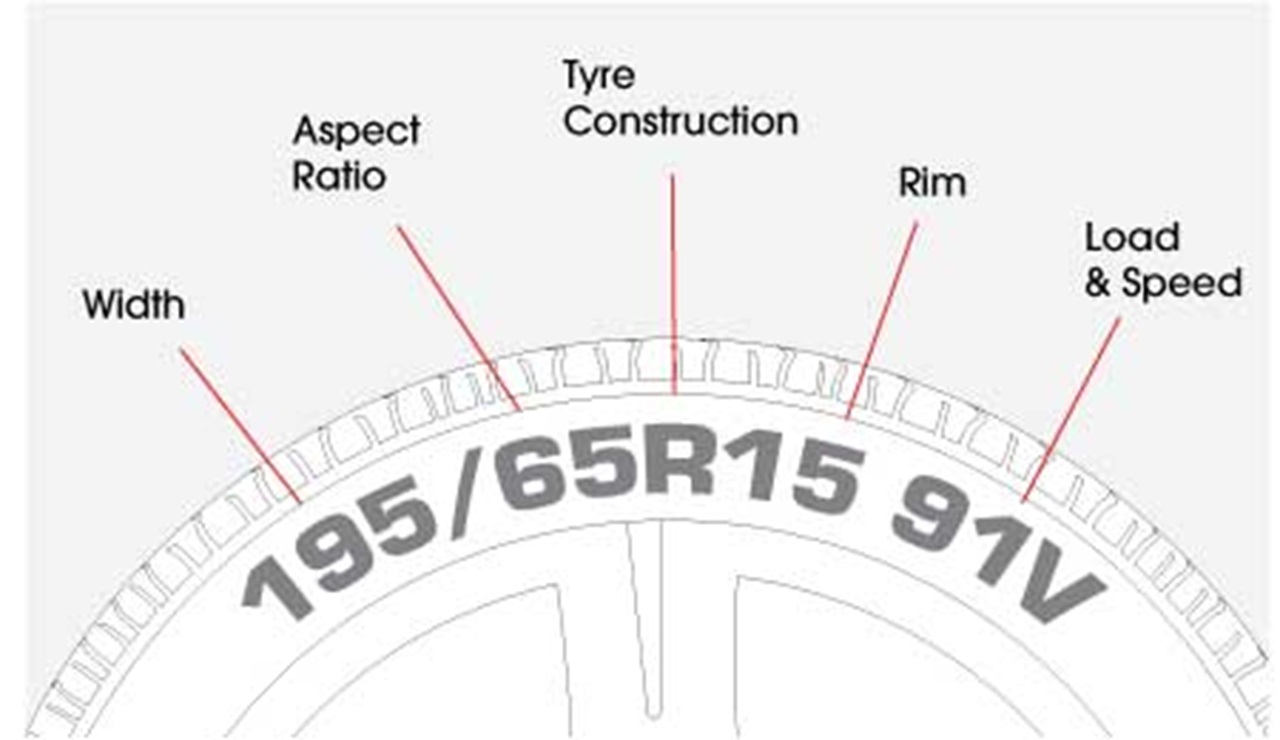
Width: The section width of your tyre in millimetres, from the inner sidewall to the outer sidewall. Example: 195mm
Aspect Ratio: The height of your tyre from the base of the tread to the rim, as a percentage of the tread width. Low profile tyres have smaller aspect ratios. Example: The height of this tyre is 65% of its width.
Tyre Construction: The method used to construct your tyre. Example: R, for radial ply construction. This is the most common method of construction for passenger tyres.
Rim: The diameter of the wheel rim in inches. If you are buying wheels for existing tyres, this is the size you will need. Example: 15 inches.
Load Index and Speed Symbol The maximum load capacity under which your tyre can safely operate, and at what speed. This is subject to the tyre being in sound condition, correctly fitted, and with the recommended inflation pressure. Example: 91 V
How to find your tyre size?
Knowing how to check tyre size is straightforward. You can find your tyre size by examining the sidewall of the tyre, referencing your vehicle's owner's manual, or locating the placard inside the driver’s door jamb. Accurate tyre size ensures optimal performance, safety, and fuel efficiency.
If still uncertain about your tyre size, contact your local Bridgestone store who will be able to assist with all your tyre needs.
Understand Your Tire Size Markings
Understand your tire size markings with Bridgestone. Learn how to read tire codes—including width, aspect ratio, rim diameter, load index, and speed rating. Our video breaks down the numbers and letters on your tires, so you can select the right tires for your vehicle. Visit your local Bridgestone Select store for expert guidance on tire sizes and replacements.
How does a tyre size calculator work?
A tyre size calculator helps compare tyre specifications and understand how different tyre sizes may affect your vehicle. By entering your current tyre size, you can compare measurements such as tyre width, sidewall height, wheel diameter and overall tyre diameter.
Changing tyre sizes can affect speedometer accuracy, handling, clearance and vehicle compliance, so always check with a tyre professional before fitting a different size from the manufacturer recommendation.
Tyre markings explained
OD:
The overall diameter of your unloaded tyre in mm.
Type Definitions:
An abbreviation providing information about the type of your tyre.
Examples:
RFT – Run Flat Technology
MOE – Mercedes Original Equipment
LRR – Low Rolling Resistance
RBT – Raised Black Letters Tubeless
OWT – Outline White Letters Tubeless
RWT – Raised White Letters Tubeless
LWT – Line White Tubeless
TT – Tube Type
TL – Tubeless
XL – Extra Load
LT – Light Truck construction
N* - Porsche specification
☆ – BMW spec

Let's find tyres to suit you
-
Search by rego
-
Search by size
-
Search by vehicle


Frequently asked questions
-
 Can I change my tyre size from the manufacturer recommendation?
Changing tyre size is possible, but it must be done within legal and safety limits in Australia. Incorrect sizing can affect braking, handling, speedometer accuracy, and vehicle safety systems, and may impact insurance or roadworthiness.
Bridgestone Select Tyre & Auto can help ensure any alternative tyre size is safe, compliant, and suitable for your vehicle before installation.
-
Why is using the correct tyre size important?
Using the correct tyre size ensures optimal vehicle safety, braking performance, fuel efficiency, and stability control operation. It also prevents uneven wear and ensures your vehicle performs as intended by the manufacturer.
Bridgestone Select Tyre & Auto ensures your tyres are correctly matched to manufacturer specifications for safe and reliable driving.
-
Where do I find my correct tyre size?
You can find your tyre size on the sidewall of your current tyres, the vehicle's tyre placard or in the owner's manual.
The tyre placard is commonly located inside the driver's door opening, although it may also be found inside the fuel flap, glove box or under the bonnet, depending on the vehicle.
-
How do I calculate my tyre size using a tyre size calculator?
A tyre size calculator helps you identify the correct tyre dimensions by converting the markings on your tyre sidewall or vehicle details into standard tyre sizing. It ensures you select tyres that match your manufacturer’s specifications for width, profile, rim diameter, load, and speed rating.
This ensures your replacement tyres remain safe, road-compliant, and correctly matched to your vehicle, with Bridgestone Select Tyre & Auto able to help confirm the correct fit.
-
What do the tyre numbers mean?
The tyre sidewall, located between the wheel rim and tread, displays tyre numbers and letters that indicate the tyre’s size, construction, load capacity, and speed rating. These markings help you select tyres that fit your car safely and perform reliably.
For example, a tyre marked 205/55 R16 91V means:
- 205 = tyre width in millimetres
- 55 = aspect ratio (sidewall height as a percentage of width)
- R16 = radial construction and wheel diameter in inches
- 91V = load index and speed rating
Always check your vehicle’s tyre placard or owner’s manual, and use the Bridgestone tyre size calculator to confirm compatibility and ensure optimal performance.
-
Width
-
Aspect
-
Rim Size
-
Load
-
Speed
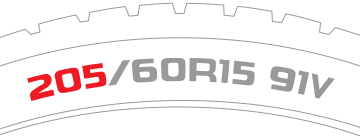 The section width of your tyre in millimetres.
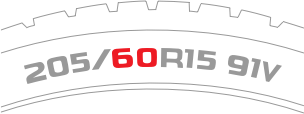
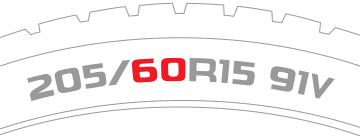 The sidewall height measured from the base of the tread to the rim. This number represents a percentage of the tread width. Low profile tyres have smaller aspect ratio percentages.
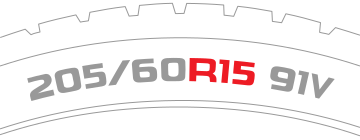 The diameter of the wheel rim in inches. This is the size you will need to choose if you are buying wheels for an existing tyre.
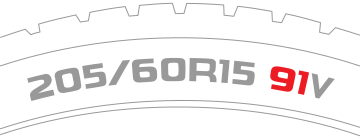 The maximum load capacity at which your tyre can be safely operated. This is subject to your tyre being in sound condition, correctly fitted and inflated at the recommended pressure.
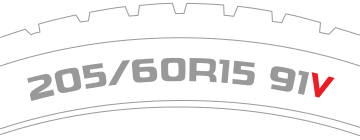 A code indicating the speed at which your tyre can be safely operated. Again, this is subject to your tyre being in sound condition, correctly fitted and inflated at the recommended pressure.
 -
What do the numbers on my tyre mean?
The numbers and letters on your tyre sidewall identify your tyre's size and specifications. They indicate the tyre width, aspect ratio, construction type, wheel diameter, load index and speed rating, helping you choose the correct replacement tyre for your vehicle.
You can also find the recommended tyre size on your vehicle's tyre placard or in the owner's manual.
-
Can I put different size tyres on my car?
Different tyre sizes may affect vehicle handling, speedometer accuracy and compliance requirements. Always check with a tyre professional before changing from the manufacturer-recommended tyre size.
-
How do I know what size tyres my car needs?
The correct tyre size for your vehicle is the size recommended by the manufacturer. You can confirm it by checking your vehicle's tyre placard, owner's manual or the markings on your current tyres. Using the recommended tyre size helps maintain your vehicle's safety, handling and performance.